

Approximately 20 seeds per packet
Collected and packaged: 2025
Germination code: 60C

Please refer to our germination codes and growing information for recommendations and tips.

Seed treatment recommended: this species needs a minimum of 60 days of cold moist stratification to break its natural dormancy and encourage germination. Alternatively, sow seeds in outdoor containers in the fall or winter, with germination occurring in the spring. If seed is untreated by February, we recommend artificially moist stratifying in a fridge. Seeds of this species appreciate being covered by a thin layer of soil or buried lightly when sown to aid in germination. A general rule of thumb is to cover them with a layer of soil no more than two to three times their width. However, it's better to plant seeds shallow, and most seeds will germinate even if surface sown. (Optional) Sprinkling a layer of sterile sand or vermiculite overtop the soil and sown seeds usually won't negatively impact germination, and may help to maintain soil moisture and deter mold.
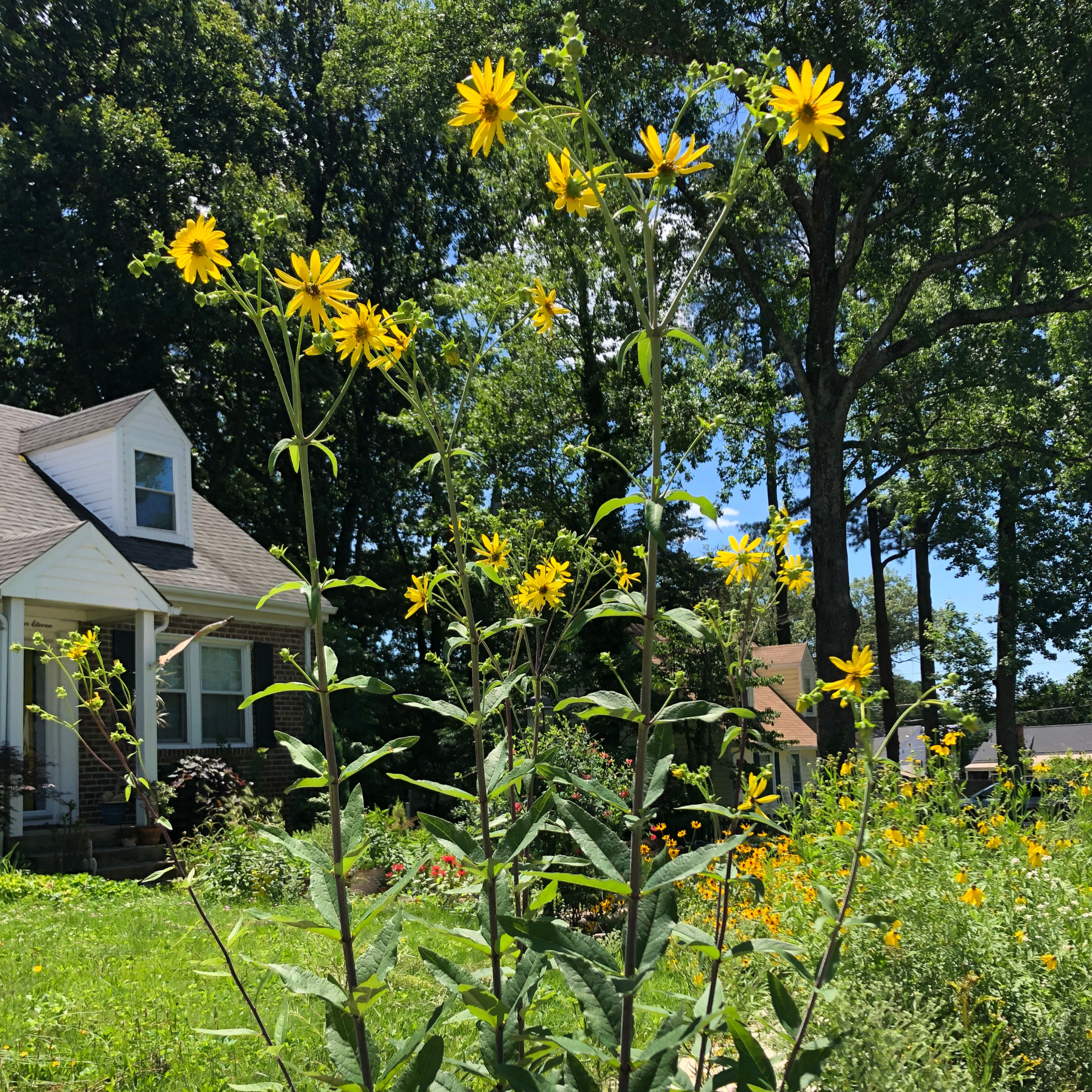
Silphium asteriscus (Whorled rosinweed) Seed Packet
Virginia ecotype - Hanover County
- Duration: Perennial
- Habit: Upright, columnar, clump-forming, naturalizing
- Size: Typically 3 to 6 feet tall; 2 to 3 feet wide
- Flowering Time: July to September
- Bloom Color: Bright yellow ray flowers with yellow to brown central discs
- Habitat: Open woods, meadows, roadsides, prairies, and woodland edges
- Moisture: Average to moist; drought tolerant once established
- Light: Full sun to part sun, best performance in full sun
- Soils: Loamy, clay-loam, or sandy soils; tolerates poor or rocky soils
- Uses: Pollinator gardens, cottage gardens, prairie restorations, native meadows, wildlife plantings, erosion control, difficult sites, steep slopes
Silphium asteriscus var. trifoliatum, or the whorled rosinweed, is a delightfully whimsical upright summer flowering perennial that adds height and brightness to the landscape and wild plantings. Native to prairies and meadows, as well as open, dappled woodlands, rocky outcrops, savannas, or shaded forest edges, whorled rosinweed is highly versatile.
Staying low as a clump of rough-textured and dense basal rosette, whorled rosinweed shoots up purple-stemmed stalks with whorled leaves in May and June, reaching 3-6 feet in height, and creates clusters of lemony or golden yellow sunflower-like blooms that can continue sporadically into fall. The large, flat seeds are enjoyed by birds such as goldfinches, which pinch the seeds out of the flowerheads.
Consider using this species instead of Silphium perfoliatum, the cup-plant, which isn't native to central and eastern Virginia, and has a reputation for aggressive spreading through rhizomes. Silphium asteriscus stays a few feet smaller than cup-plant, is longer blooming, and is clumping in habit rather than rhizomatous. Whorled rosinweed can happily colonize an area through light reseeding (assuming birds leave any seed behind), and makes an excellent addition to wild meadows or plantings that need a strongly upright plant.
Silphiums are tough as nails, with roots that descend deep into the soil, sometimes many yards down. They need well draining soil, and are highly tolerant of drought once established. Rosinweed can grow in poor, rocky soils, and along steep inclines.
There are two varieties, var. asteriscus (Starry rosinweed) and var. trifoliatum (Whorled rosinweed), the latter being the more commonly occurring species to the central Virginia region.