
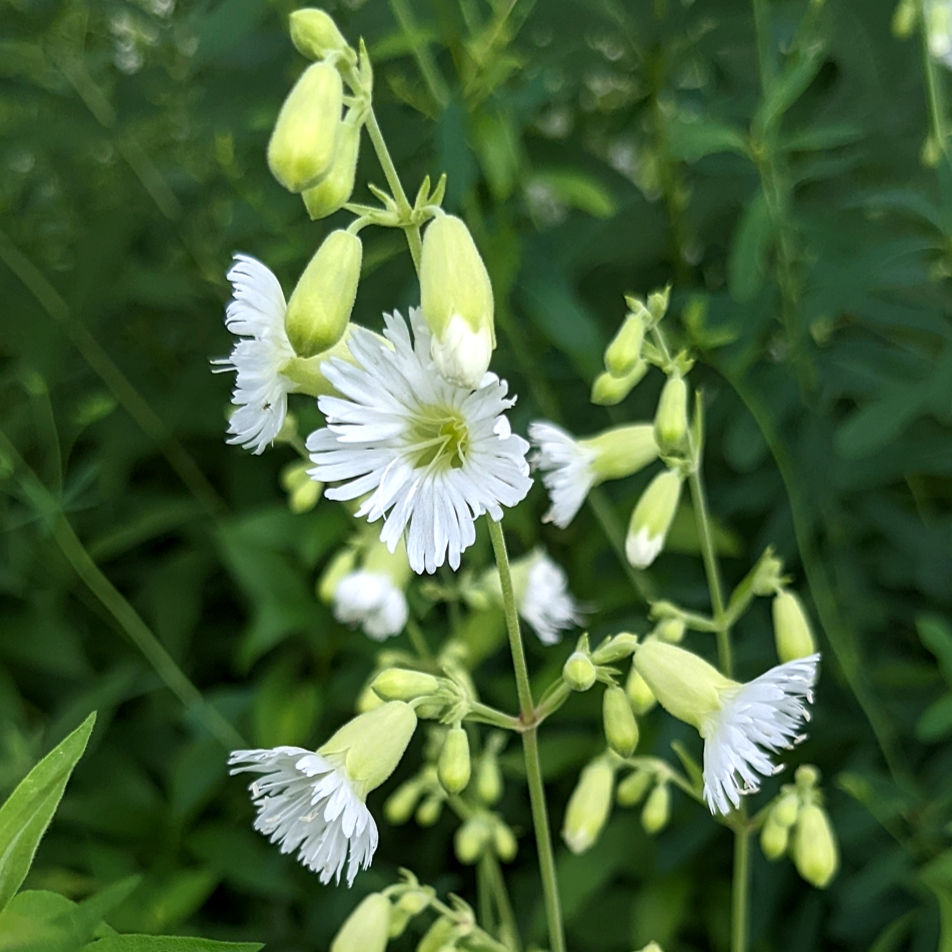

Virginia ecotype
- Duration: Perennial
- Habit: Upright, low growing
- Size: typically up to 2 feet tall/wide when in flower
- Flowering Time: June to August
- Bloom Color: White
- Habitat: Open woodlands, woodland edges, rich slopes, and stream edges
- Moisture: Average to moist, well draining
- Light: Part sun to shade, adaptable
- Soils: Sandy, silty, loamy; adaptable
- Uses: Low-growing pollinator gardens, cottage gardens, shade gardens, woodland gardens
Silene stellata (Starry campion)
Commonly known as starry campion, widow's frill, and, whorled catchfly, Silene stellata has upright stems and loose clusters of distinctive white bell-like flowers, each petal deeply divided into narrow lobes that create a delicate star-like appearance.
Blooming from summer into early fall, the branches of flowers often open towards the evening, lending the plant a subtle but enchanting presence. Preferring shade, Silene stellata is well suited to native woodland gardens and naturalistic plantings in part sun.
Starry campion is typically visited by moth, butterflies, and bees. Its pale, lightly fragrant flowers are adapted to attract nocturnal visitors, including night-flying moths that probe the long floral tube for nectar.