
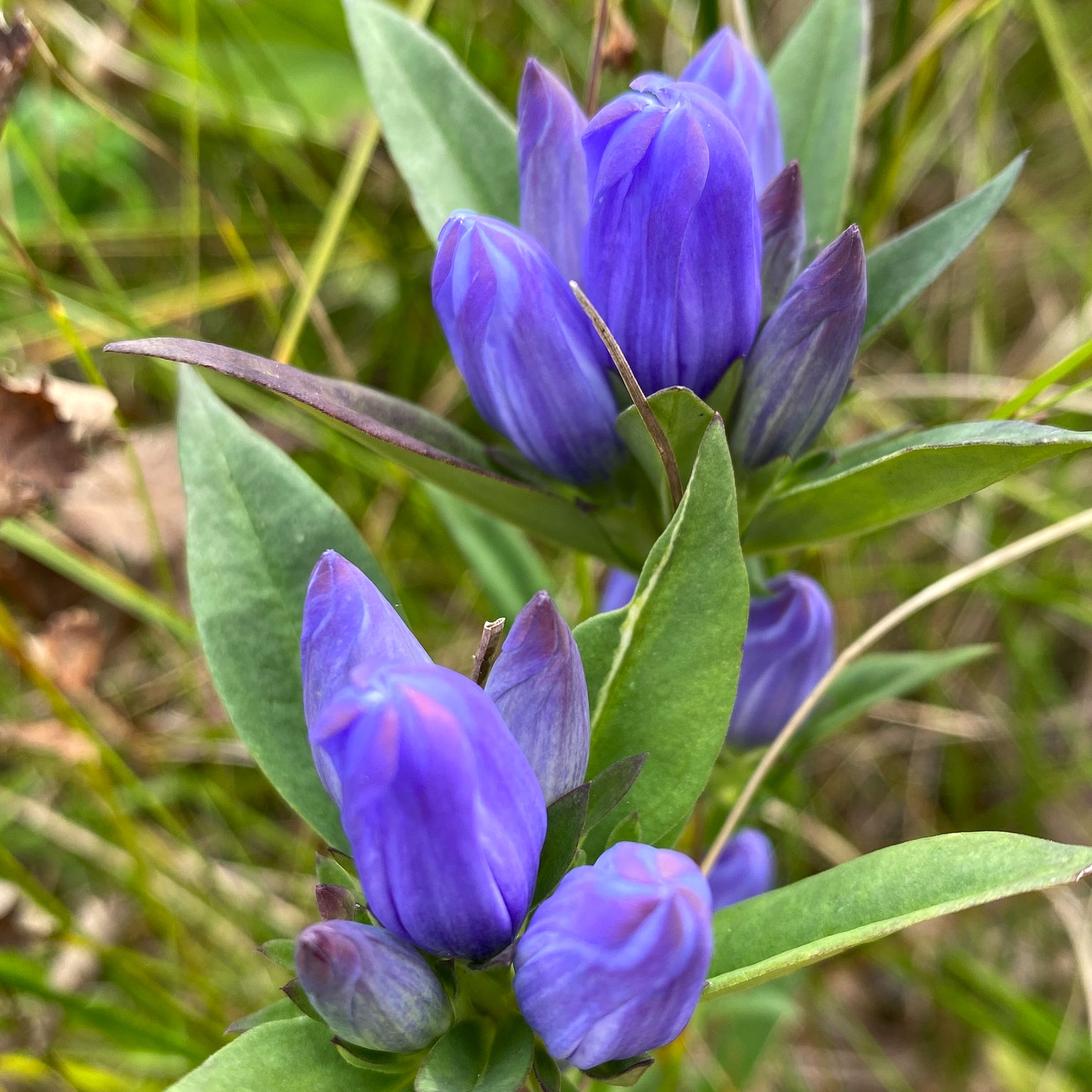

Virginia ecotype
- Duration: Perennial
- Habit: Upright, low growing
- Size: typically under 2 feet tall even when in flower
- Flowering Time: August to October
- Bloom Color: Violet-blue to occasionally pink-purple
- Habitat: ditches, depressions, woodland creeks, stream sides, moist meadows
- Moisture: Moist to wet, well draining to seasonally wet; not drought tolerant
- Light: Full sun to part sun, best showing in full sun
- Soils: Sandy, silty, loamy; adaptable so long as high moisture
- Uses: cottage gardens, rain gardens, pollinator gardens
Gentiana saponaria (Soapwort gentian)
Gentiana saponaria is typically found in moist meadows, seepage slopes, open woodlands, and wet prairie remnants. Commonly called soapwort gentian, it forms upright stems from a system of taproots, with smooth, lance-shaped leaves. It produces deep blue-violet (and rarely rosy-purple) bottle-shaped flowers in late summer and fall.
Unlike many wildflowers, the soapwort gentian's blossoms remain fully closed, with only slight openings at the tips, giving them a distinctive bottle-like appearance even at full bloom. It is only pollinated by insects, such as native bumblebees, which are strong enough to fully climb inside the blossoms to reach the bountiful nectar and pollinate the flowers.
Soapwort gentian thrives in moist and occasionally wet, well-drained soils. It's at home in rain gardens and near the edges of streams and ponds.