
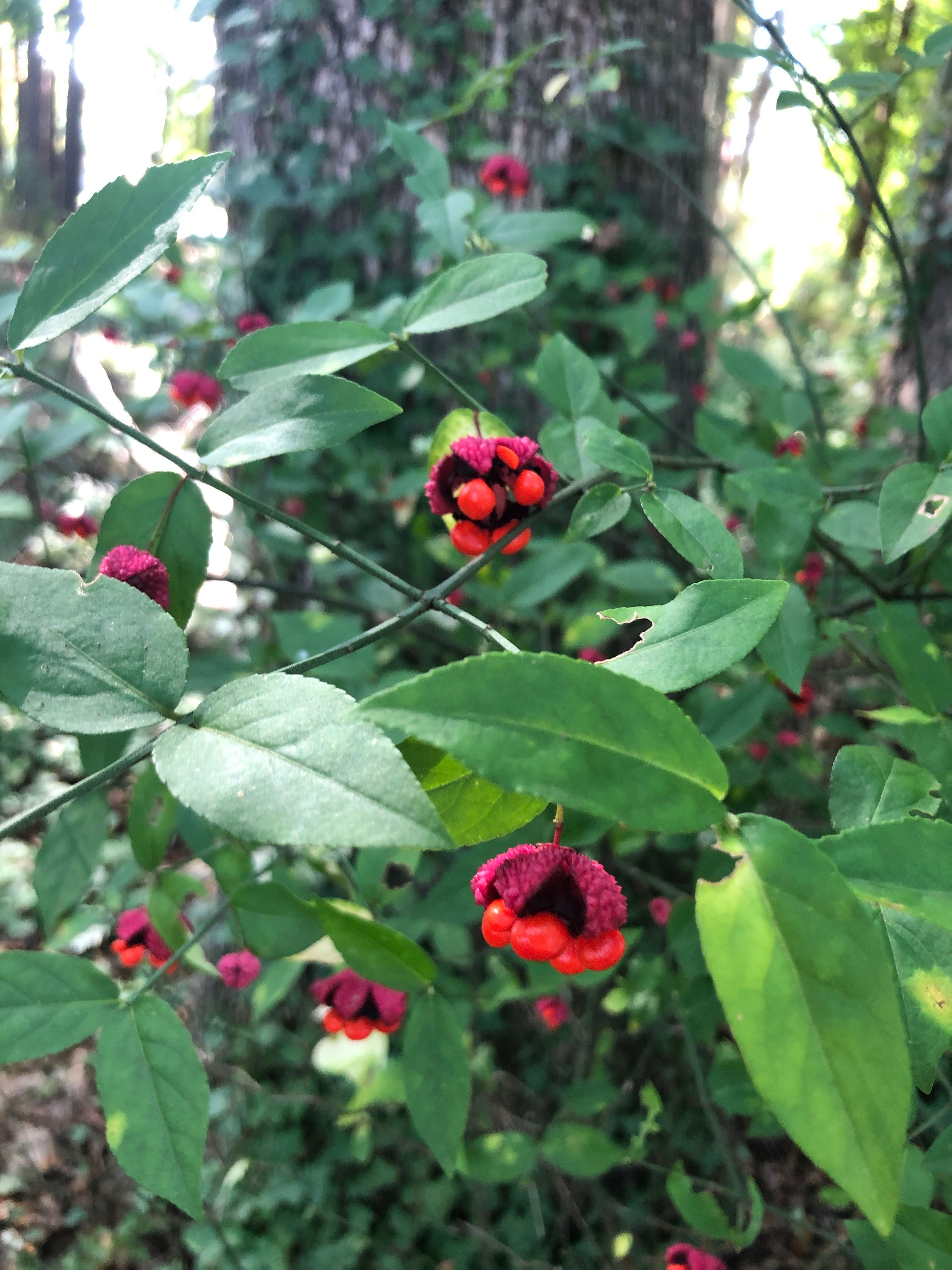

Virginia ecotype
- Duration: Shrub (deciduous perennial)
- Habit: Upright, open, arching, occasionally thicket-forming
- Size: Typically 3 to 6 feet tall; about as wide
- Flowering Time: April to June
- Bloom Color: Greenish-yellow (inconspicuous)
- Habitat: Moist woodlands, stream banks, forest edges
- Moisture: Average to moist; well-drained
- Light: Part shade to shade (can tolerate dappled sun)
- Soils: Loamy or sandy; prefers slightly acidic soils
- Uses: Woodland gardens, naturalistic plantings, wildlife and bird gardens, native understory restoration
Euonymus americanus (American strawberry bush)
Euonymus americanus, commonly known as strawberry bush or hearts-a-bustin', is a deciduous understory shrub native to the southeastern and eastern United States. Growing 3 to 6 feet tall and equally wide, it features long, arching stems with simple, finely toothed leaves that turn yellow to reddish in the fall.
Its small, greenish-purple flowers bloom in late spring and are easy to overlook, but they give rise to its most striking feature: seed capsules that turn red and burst open in fall to reveal bright scarlet-orange arils. These eye-catching fruits give the plant its common name and offer seasonal visual interest in shaded or woodland landscapes.
Ecologically, Euonymus americanus is an important food source for wildlife. Its showy red fruit is eaten by songbirds, wild turkeys, and small mammals, which help disperse the seeds. The shrub also provides dense cover for ground-nesting birds and small animals. It is part of a native plant palette that contributes to healthy woodland ecosystems.
Its tolerance for shade and moist, loamy soils makes it an excellent choice for naturalized plantings, restoration of forest understories, and enhancing biodiversity in shaded garden spaces. However, it should not be confused with invasive non-native Euonymus species, such as Euonymus alatus (burning bush), which can be aggressive in natural areas.